
Decatur, GA · Garage Door Service
Older Decatur Homes and the Doors That Came With Them
Most Decatur houses were built 1951-1994, median 1972, before insulated doors were standard. Here's what that means for your door in a cold-moderate climate.
- Repairs & new doors
- Springs & openers
- Serving 8 nearby communities
What Is Going On
Most of the housing stock around Decatur went up between 1951 and 1994, with a median build year of 1972. That one number explains a lot of the service calls we get. A house built in 1972 almost never got a garage door with any real insulation in it - a single layer of steel or a slab of wood, maybe some cosmetic paneling, and that's it. Insulation wasn't something builders or buyers were asking for on a garage door back then. It got added to product lines later and became common well after most of these houses were already standing.
Across the 25 named areas near us - Avondale Estates, Druid Hills, Scottdale, North Decatur, Kirkwood, East Atlanta, and the rest - that 1960s-70s stock is the norm, not the exception. So when we show up to look at a door that's sagging, rattling, or letting a draft through the bottom seal, the first thing we check is the build era, because it tells us almost everything about what hardware and panel type we're dealing with before we even open the door.
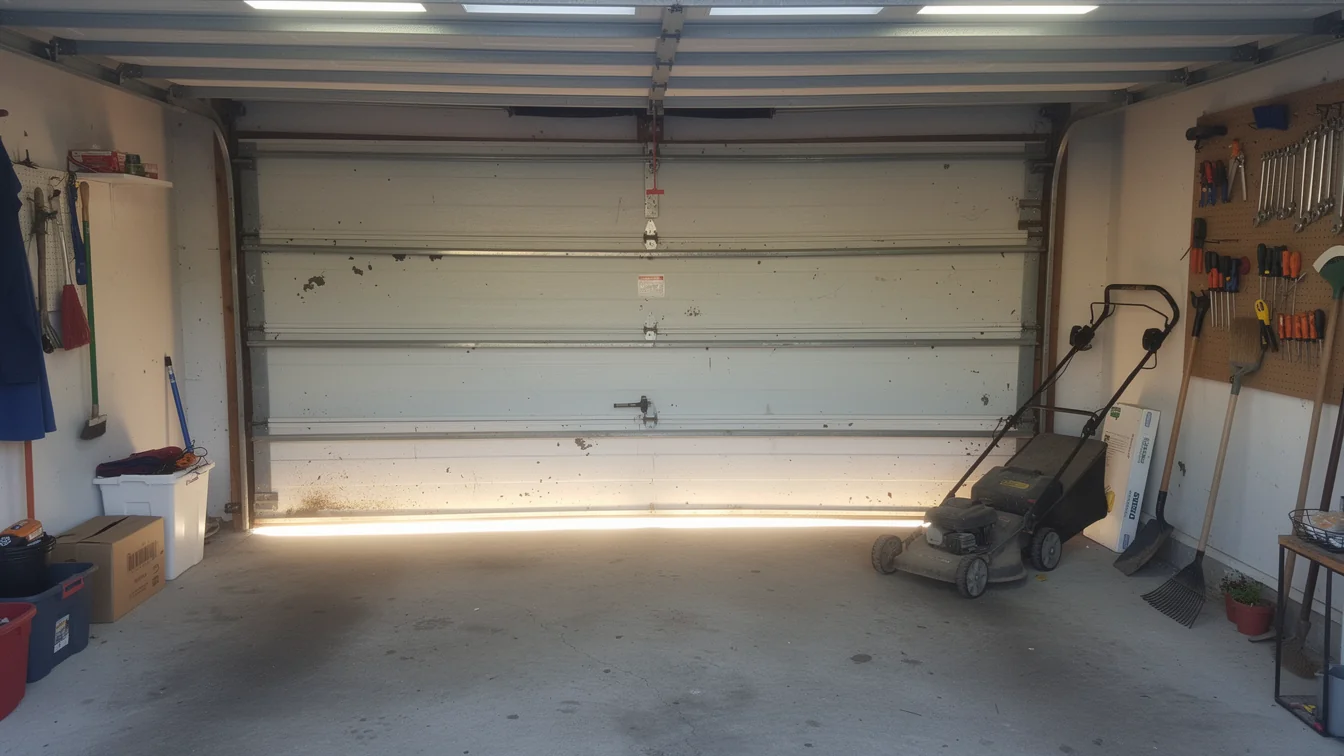
This isn't a defect. It's just what doors looked like when these houses were framed. The problem shows up now because thirty, forty, fifty years of Georgia weather on an uninsulated steel skin takes a toll nobody planned for at the time.
What Local Conditions Do
Decatur sits in a cold-moderate climate band - not brutal winters, but real temperature swings through the year, humidity most months, and freeze-thaw cycles that are harder on old hardware than people expect. An uninsulated door from the 1972-median building stock doesn't just lose heat. The steel skin expands and contracts with every swing, and on a door that age, the seams, the weld points, and the track alignment have usually shifted a little more than the homeowner realizes.
Without a thermal break or foam core, you also get condensation on the inside face of the door in humid stretches, which over decades works on the bottom panel and the hardware fasteners. We see more rust at the roller brackets and bottom bracket on old uninsulated doors than on anything built with modern panel construction.
None of this means the door is about to fail tomorrow. Plenty of 1960s and 70s doors in this area are still running, just loud, heavy to lift by hand, and colder to stand next to than people think a garage door should be. It just means the physics of an uninsulated steel panel in this climate band catches up with these doors on a longer timeline than it would somewhere milder or drier.
What to Check
If your house falls in that 1951-1994 range - and across this service area, with 32,347 owner-occupied houses out of 96,667 households, a lot of them do - there are a few things worth looking at before you call anyone. First, the bottom panel: uninsulated steel dents and bows more easily, and on an older door that bow is often already there, just not causing a problem yet. Second, the weatherstripping at the bottom - on a door this old it's usually been replaced once or twice already, and a hard, cracked seal is doing nothing for you.
Third, check the springs. A door without insulation is lighter than an insulated one, but on a house built mid-century the torsion hardware itself may be original or close to it, and springs have a cycle life regardless of door weight. Fourth, look at the panel seams for rust streaks, which tell you condensation has been sitting there a while.
We'll be honest about one thing: if the door is original to a 1972-era house and the track is bent or the panels are rusted through at the bottom, insulating retrofit kits or weatherstrip swaps aren't worth the labor. At that point replacement with a door built to current standards costs less over time than patching something that old.
Season by Season
In a cold-moderate climate, the stress on an old uninsulated door doesn't come all at once - it comes in cycles. Cold mornings tighten the steel and stiffen the seals; by afternoon, especially in humid months, everything's expanded again. That repeated cycle is what loosens fasteners and works rollers out of track alignment on doors from the 1960s and 70s stock that makes up most of this area.
Early in the cold season is the best time to check the bottom seal and weatherstripping, since a cracked seal lets in both cold air and moisture once the weather turns. Mid-winter is when uninsulated doors get noticeably colder to the touch and heavier to lift, because cold steel doesn't flex the way it does in warmer months - that's often when people notice a strain on the opener for the first time.
As the weather warms and humidity climbs, watch the inside face of the door for condensation runoff, especially near the bottom panel, since that's where old steel without a thermal break shows water damage first. None of this is urgent on its own. It's just the pattern these older, uninsulated doors follow here, year after year, until something finally needs attention.
Frequently asked questions
Why doesn't my garage door have any insulation?
If your house was built anywhere near the area median of 1972, insulation just wasn't standard on garage doors at the time. Most houses from that era got a single-layer steel or wood door with no foam core. It's not a sign anything was done wrong - insulated doors became common well after most of this area's houses were built.
Is it worth insulating an old garage door instead of replacing it?
Depends on the door's condition. If the panels and track are solid and just cold, a retrofit kit can help. If there's rust at the seams or the bottom panel is bowed, which is common on original 1960s-70s doors in this area, replacement usually costs less over time than patching an old uninsulated panel.
Does Decatur's climate actually affect an uninsulated door that much?
Yes. The cold-moderate swings here mean steel expands and contracts through most of the year, and humidity adds condensation risk on uninsulated panels. It's a slower wear pattern than extreme climates see, but on a door already decades old it adds up at the seams, fasteners, and bottom bracket.
Related garage door services in Decatur
More garage door guides
Book garage door service in Decatur
Call now or request a quote - tell us what the door is doing and where you are.