
Decatur, GA · Garage Door Service
Why Decatur Garage Doors Let the Cold In
Most Decatur garage doors date to the 1960s-70s building boom. Here's why seals fail on that stock and what to check before winter settles in on this side of Atlanta.
- Repairs & new doors
- Springs & openers
- Serving 8 nearby communities
What Is Going On
Walk through Scottdale, North Decatur, or Druid Hills and you're looking at garage doors built for houses that mostly went up between 1951 and 1994, with the bulk of that stock dating to the 1960s and 70s. That matters because the seal technology on those original door jobs was never built to last fifty-plus years. The rubber or vinyl bottom astragal hardens, cracks, and pulls away from the slab. Same story with the side and top seals - if the house still has its first or second door, the weatherstripping is older than the ownership on record for most of these lots. A door that seals fine in a Doraville new-build context doesn't tell you anything about a door on a 1968 split-level in Candler-McAfee. The track and jamb geometry on that era of construction has settled over decades, so even a brand-new seal can gap unless you match it to the actual opening, not a generic kit size. We see this across the 25 or so named areas we work in - Avondale Estates, Belvedere Park, Panthersville - and the pattern repeats because the housing era repeats. It's not one bad batch of doors. It's one bad decade of seal material meeting fifty winters.
What Local Conditions Do
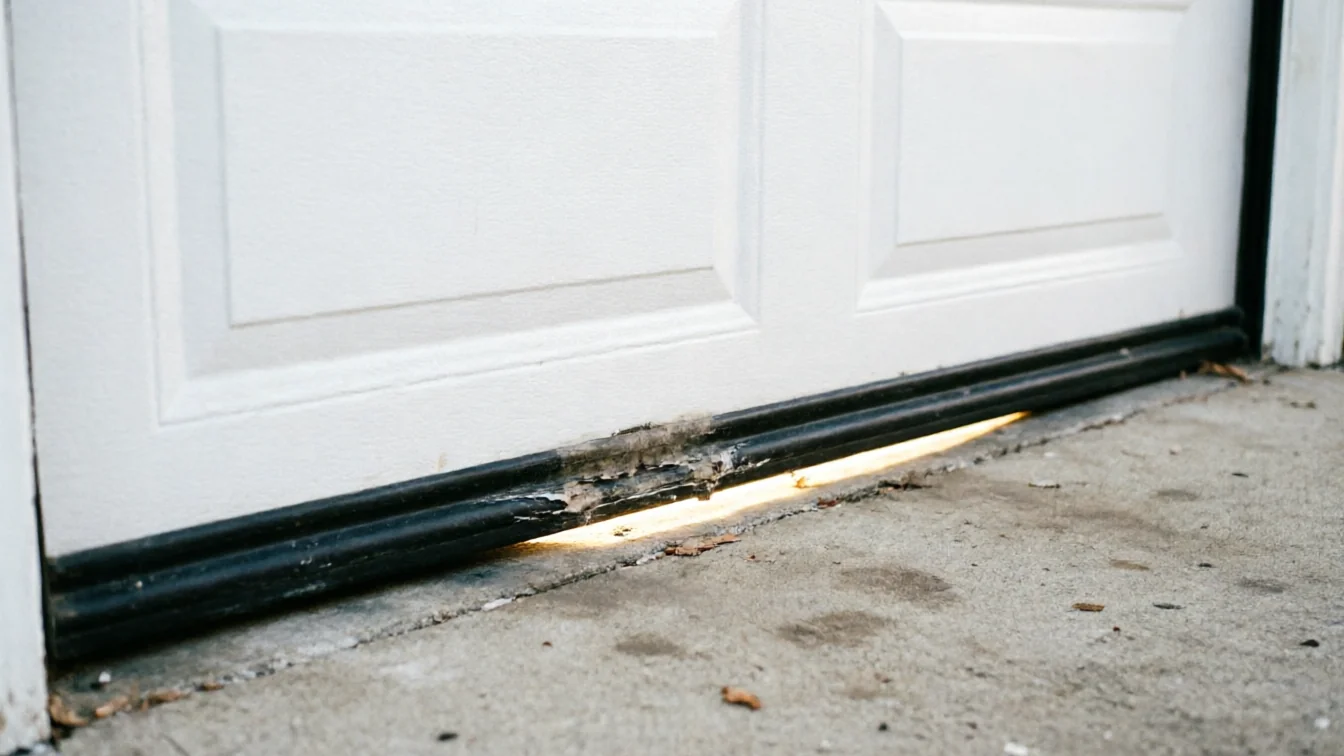
This area sits in a cold-moderate climate band - not the deep freeze of the upper Midwest, but enough swing between summer heat and winter cold to work a seal hard twice a year. Vinyl and rubber astragal flex with temperature. In a stretch of 1960s-70s houses like you find around North Druid Hills and East Atlanta's edge, that flexing has been happening on the same strip of material since before most current owners bought the place. The seal doesn't fail all at once - it shrinks a little every freeze-thaw cycle until one day there's daylight under the door. Moisture gets in through that gap, and on slab foundations common to this building era, that means water finds the lowest point in the garage, which is usually right where stored items sit. The draft problem and the water problem are the same problem. Fix the seal before the gap gets wide enough to matter and you solve both. Leave it, and you're pumping conditioned air out and cold damp air in every day the furnace or AC runs.
What to Check
Start at the bottom. Press a hand along the floor seal while the door is closed - if you feel moving air anywhere along that strip, it's compressed flat or torn, not just dirty. Next check the stop molding on both sides of the jamb; on houses from the 1972 median build year, that wood trim has often shifted slightly, leaving a seal that no longer meets it square. Look at the top seal where the door meets the header - this one gets ignored because it's out of sight, but it's doing real work against wind-driven drafts. Last, check the seal where panels meet each other on sectional doors; on older torsion setups this isn't always replaceable with an off-the-shelf kit, and that's worth knowing before you spend money on parts that won't fit. One honest limit here: if the track or jamb itself has shifted out of square from decades of settling, a new seal alone won't close the gap - that's a door or track adjustment job, not a weatherstrip job.
Season by Season
Fall is the window to deal with this, before the cold-moderate winter sets in. Check seals in October while it's still easy to get parts and schedule work before demand picks up. Winter is when a bad seal costs the most - every draft is pulling heated air out of a garage that, on this era of housing, often backs onto living space or a laundry room, so the leak isn't contained to an empty box. Spring is for checking what winter did: cracked vinyl, pulled staples, a bottom seal that's gone stiff and won't compress anymore. Summer heat does its own damage, drying out rubber seals until they lose flex entirely, so a seal that survived winter can still fail by August. Across the service area - whether it's a house near Pine Lake or one out toward Stone Mountain - the same yearly rhythm applies because the housing stock and the climate band are shared, not local to one street.
Frequently asked questions
Why does my garage door let in cold air even though it closes all the way?
On houses from the 1960s-70s building era common here, the original bottom seal has usually hardened and shrunk over the decades. It can look closed while still leaving a gap you can feel with your hand. The fix is replacing the astragal, not adjusting the door.
Is a seal problem the same as a door problem?
Not always. A worn seal is a cheap, quick fix. But if the jamb or track has shifted - common in houses built around the 1972 median year as foundations settle - a new seal won't close the gap on its own. That needs a track or jamb check first.
When should I replace garage door weatherstripping in this area?
Fall, before the cold-moderate winter season sets in, is the best time. Checking in October gives you time to get the right part size for an older jamb before the first real cold snap.
Related garage door services in Decatur
More garage door guides
Book garage door service in Decatur
Call now or request a quote - tell us what the door is doing and where you are.