
Decatur, GA · Garage Door Service
What That Sound Coming From Your Garage Door Actually Means
A grinding, popping, or banging garage door in Decatur usually points to one of a handful of causes tied to the area's 1950s-90s housing stock. Here's how to tell them apart.
- Repairs & new doors
- Springs & openers
- Serving 8 nearby communities
What Is Going On
Most of the sound complaints we hear around Decatur trace back to the age of the house, not the door itself. A lot of this area - Avondale Estates, Druid Hills, Scottdale, North Decatur, and the rest of the 25-odd pockets that make up the service area - was built between 1951 and 1994, with the typical house going up around 1972. That means original tracks, original hinges, and original torsion hardware are still doing the job on a huge share of doors here, just worn down by five decades of Georgia humidity and temperature swings.
A popping sound when the door starts moving is usually a hinge pin that's dry or slightly bent, not a structural problem. A rhythmic thump once per rotation means a roller has flattened a spot or a track bracket has worked loose from the jamb over the years. A grinding or screeching noise is almost always metal-on-metal where grease has dried out completely. None of these are emergencies by themselves. What they are is your door telling you something wore out faster than you expected, which on a house from the 1960s or 70s is just math, not bad luck.
What Local Conditions Do
Decatur sits in a cold-moderate climate band, which doesn't sound dramatic but it does real work on hardware year over year. The swing between a humid summer and a handful of real cold snaps each winter makes steel expand and contract, and it pulls moisture in and out of anything with a seam - hinges, roller stems, the torsion spring itself. On a door that's only a few years old, that cycling is background noise. On a door running original 1960s or 70s hardware, which is still common across this part of the service area, that cycling has had forty or fifty years to work bolts loose and dry out lubrication nobody's reapplied.
This is also why a noise that showed up suddenly after a stretch of cold mornings isn't a coincidence. Metal contracts in the cold, and a spring or hinge that was already marginal will announce itself right when temperatures drop. It's not that cold breaks doors on its own - it's that cold finds the part that was already close to done.
What to Check
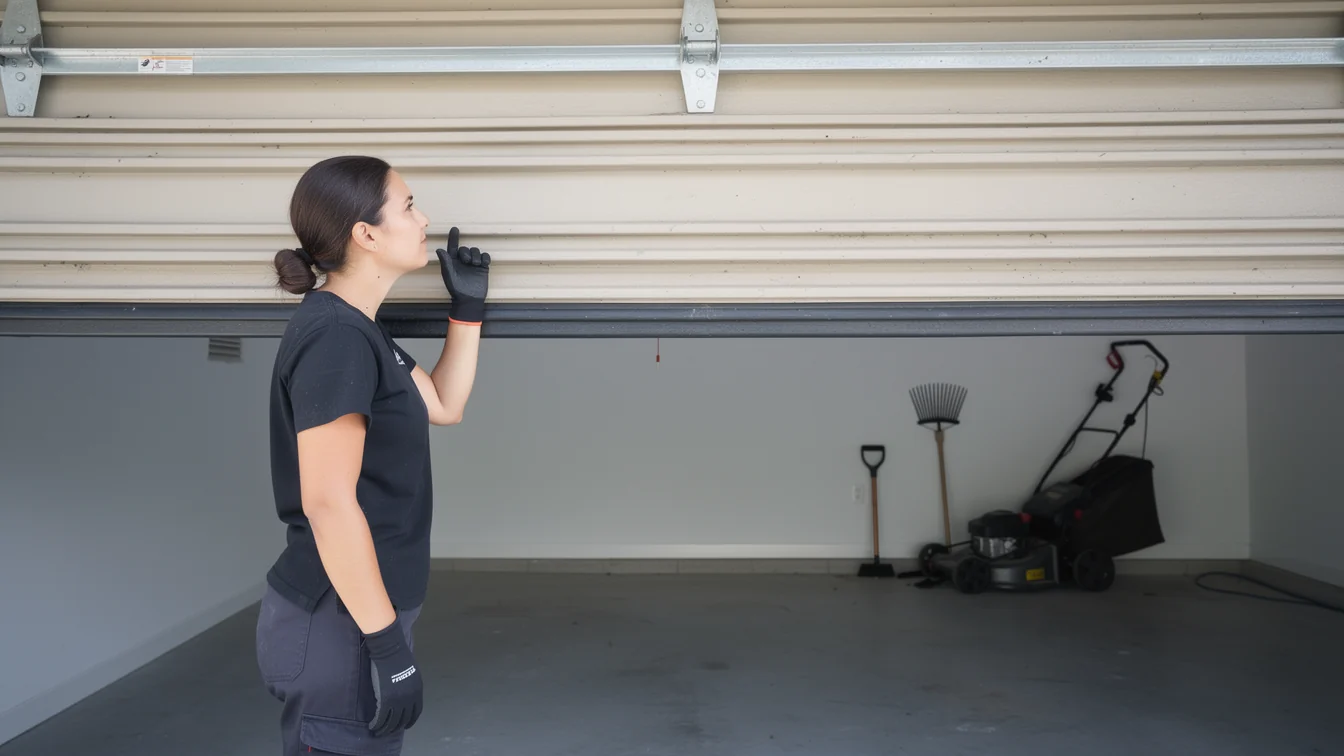
Before you call anyone, here's what you can look at yourself, standing in the garage with the door closed:
- Hinges: look for rust streaks or a hinge that's visibly bent sideways where the panel meets it. A quick spray of garage-door-rated lubricant (not WD-40, which washes grease out) quiets most squeaks for a while.
- Rollers: open the door slowly and watch each roller as it passes a track joint. A roller that wobbles or has a flat side is the thump you're hearing.
- Track brackets: check where the horizontal track bolts into the ceiling framing. On older houses this bracket can work loose over the years; a loose lag bolt there causes a bang right as the door levels out at the top.
- Spring: don't touch it. If the noise is a loud bang followed by the door refusing to open, that's a broken torsion spring, and that's a call, not a DIY fix.
We'll say this plainly: lubricant and tightened bolts fix a lot of noise complaints, and we'd rather tell you that over the phone than send a truck out for a ten-minute job.
Season by Season
Spring in this climate band is when a winter's worth of loosened bolts and dried-out hinges finally catches up with a door - this is the season we see the most noise calls. It's a good time to walk the hardware before it gets worse.
Summer humidity swells wood jambs on older houses, which can make a door rub against the track on one side and squeal rather than roll smoothly. That's a jamb issue more than a door issue, and worth checking before you assume the opener or track is at fault.
Fall is the window to get ahead of winter: lubricate hinges and rollers, snug up any loose bracket bolts, and listen for anything new before the cold sets in.
Winter is when marginal springs and hinges fail outright, because cold steel is less forgiving steel. If a noise has been building for a month and it's December, don't wait for it to get louder - on a torsion spring, the next stage after noise is usually sudden failure, not a gradual one.
Frequently asked questions
My garage door squeaks every time it opens - is that serious?
Usually not. A rhythmic squeak is almost always a dry hinge pin, especially on older hardware common across this part of the service area. Spray a garage-door-rated lubricant on each hinge joint. If it's still squeaking after that, a roller or track bracket is more likely the cause.
Why does my door make a loud bang and then stop working?
That's a broken torsion spring, and it's common on doors that have been running original 1960s-70s hardware for decades. The spring snaps under tension and the door loses the counterweight it needs to lift. Don't try to open it manually - call it in.
Is the noise worse because of winter?
Yes, in this climate. Cold steel contracts and makes marginal hardware - hinges, bolts, springs that were already near the end of their life - fail or get noisy faster than they would in a mild month. A noise that's been building tends to come to a head on a cold morning.
Can I just keep lubricating it instead of calling someone?
For hinge and roller noise, yes, often for a long stretch. But lubricant doesn't fix a bent track bracket, a flattened roller, or a spring that's already fatigued. If the same spot keeps needing oil every few weeks, that part is telling you it's done, not that it needs more grease.
Related garage door services in Decatur
More garage door guides
Book garage door service in Decatur
Call now or request a quote - tell us what the door is doing and where you are.