
Decatur, GA · Garage Door Service
Is It Worth Fixing That Old Decatur Garage Door?
In Decatur, most houses went up between 1951 and 1994, many with original torsion hardware. Here's how to judge if your garage door is still worth fixing.
- Repairs & new doors
- Springs & openers
- Serving 8 nearby communities
What Is Going On
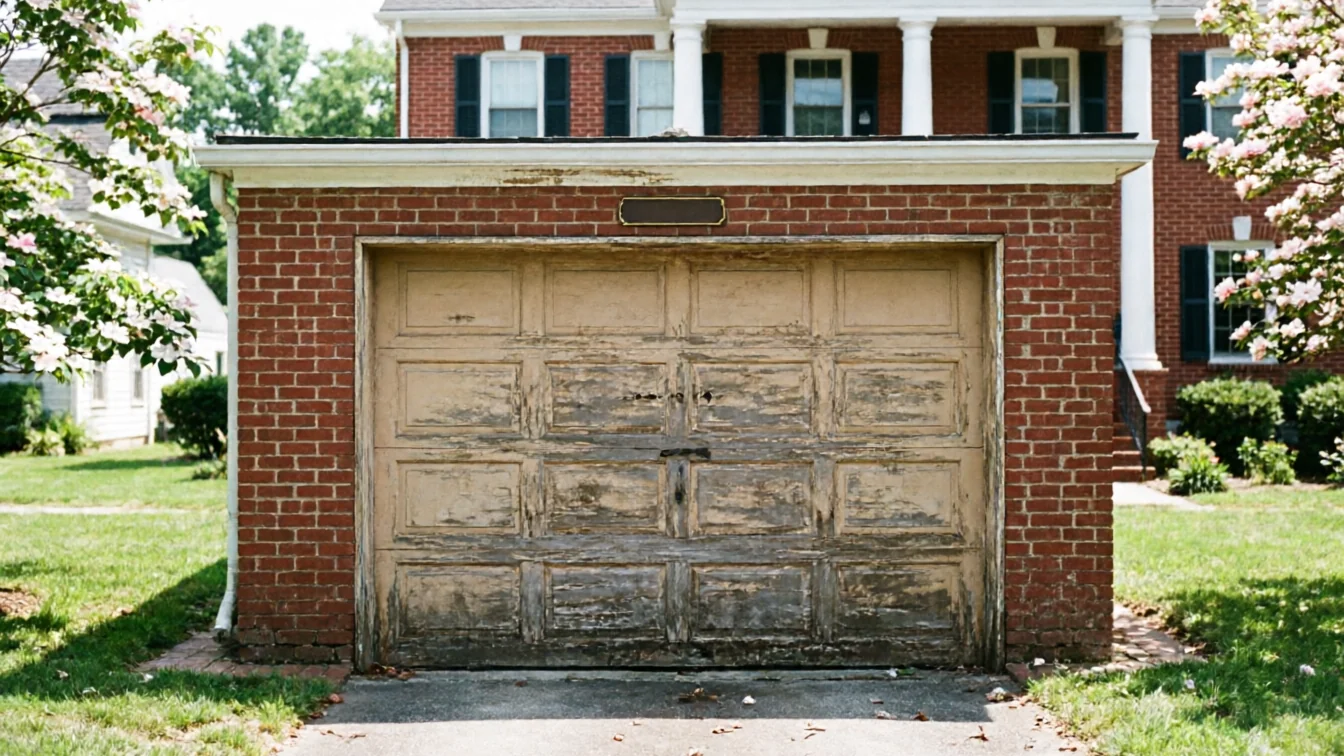
Most of the housing stock around Decatur went up between 1951 and 1994, with the median landing around 1972. That's not a small detail - it means a big share of the doors we get called out to see are original or close to it. A door installed when a house was built in the early 70s has outlived its torsion springs several times over, and in plenty of cases the opener hanging off the track is a second or third replacement bolted onto the original rail.
Across the roughly 25 named areas that share this build era - not just Decatur proper but neighborhoods like Avondale Estates, Druid Hills, Scottdale, and North Decatur close by - the pattern repeats: single-layer steel panels, no insulation, and hardware sized for a lighter door than what people often swap in later. So the question of whether to fix or replace isn't abstract here. It's a math problem tied to an actual decade, and the answer changes depending on which decade your house falls into.
A door from 1972 and a door from 1994 are not the same repair job, even if both look equally tired from the driveway.
What Local Conditions Do
Decatur sits in a cold-moderate climate band - not brutal winters, but real swings between a humid summer and a cold snap in January. That matters for a door that's 30, 40, even 50 years old. Steel expands and contracts with every swing, and on an original panel that's been painted over a few times, you'll see the seams at the joints before you see it anywhere else.
Torsion springs lose tension gradually in this kind of climate - not from one dramatic failure but from decades of flexing through hot, humid summers and cold fronts in winter. A spring rated for a certain door weight in 1972 is not rated for the insulated replacement panel someone bolted on in 2005, and that mismatch is one of the more common reasons an older door starts slamming down instead of lowering smooth.
Humidity is the other piece. A cold-moderate band still means condensation inside an uninsulated steel panel, especially in a garage that isn't vented well. Rust starts at the bottom panel first, right where water sits after rain, and it eats through from the inside before you ever see it from the street.
What to Check
Start at the bottom panel. If the house was built in the 1960s or 70s, this is usually the first place steel gives out - rust blooming from the inside, not the painted surface. Press on it. If it flexes or crumbles at the edge, that panel's done, and depending on the door style, you may not be able to source a matching replacement panel for a door that old.
Next, look at the springs. A torsion spring on a door from this era is often undersized for anything added later - a heavier insulated section, a different opener. Gaps between coils, or a door that free-falls instead of lowering with control, point to a spring near the end of its life.
Check the track and rollers for play - side play of more than a little on an old steel track usually means the track itself has loosened over the decades, not just the rollers wearing.
Here's the honest limit: if the door is original hardware from the 1960s-70s build era and the track or spring sizing is obsolete, we often can't find an exact replacement part. At that point, a full door and hardware swap costs less than chasing parts for one that old, and it's the straighter answer even if it's not the cheaper-sounding one up front.
Season by Season
Spring, after a cold-moderate winter, is when old springs tend to show their age - the metal has gone through its yearly contraction and expansion cycle one more time, and a spring that was borderline in the fall often fails in March or April. Worth a look before pollen season buries the garage in yard work.
Summer humidity is harder on an uninsulated original panel than the heat itself. Moisture sits inside the steel skin overnight and that's where bottom-panel rust gets its start, especially on houses built before insulation standards changed later in the build era.
Fall is the window to check torsion tension before winter, since a spring under-tensioned going into cold weather works harder every time it's cold. Worth doing before the first real cold front, not after.
Winter is when an already-weak spring or track picks the worst time to go, right when you need the door working for a cold morning. None of this is unique to one house - it's the shared condition of a housing stock that's now 30 to 70 years old, income levels around $62,299 median making full replacement a real budget decision rather than an easy upgrade, and tens of thousands of owner-occupied houses carrying the same original hardware.
Frequently asked questions
My garage door is from the 1970s - should I replace it or just fix the spring?
If the panels are solid and it's only the spring, a spring swap is usually worth it. But if the bottom panel shows rust from the inside or the track has loosened with age - common on houses from this build era - you're often better off replacing the whole unit rather than chasing parts for hardware that old.
Why does my old door slam down instead of lowering smoothly?
Usually a torsion spring that's lost tension, which happens gradually over decades of temperature swings in this cold-moderate climate. If someone added a heavier insulated panel later without upgrading the spring, the mismatch speeds up the wear.
Is it worth insulating an old uninsulated door instead of replacing it?
Sometimes, if the panels and track are sound. But original hardware from the 1960s-70s build era often isn't rated for the added weight of insulation kits, so check the spring sizing first - adding weight to undersized springs just creates a new failure point.
Related garage door services in Decatur
More garage door guides
Book garage door service in Decatur
Call now or request a quote - tell us what the door is doing and where you are.