
Decatur, GA · Garage Door Service
Why Cold Snaps Break Springs on Decatur Garage Doors
Why Decatur's 1950s-1990s housing stock sees more cold-weather spring failures, what to check before it snaps, and how to get through winter without a stuck door.
- Repairs & new doors
- Springs & openers
- Serving 8 nearby communities
What Is Going On
Most houses around Decatur went up between 1951 and 1994, with the median build year sitting around 1972. That means a lot of the torsion springs doing the lifting right now are original replacements from decades ago, or they're the stock spring that came with a door installed back when steel gauges and spring life cycles were rated lower than what's sold today. A spring doesn't care what year it is, but it does care about cold. Steel contracts when the temperature drops, and a spring that's already fatigued from thirty-plus winters of cycling has less give left in it. That's why the call we get after a hard freeze is almost always the same: the door won't move, there's a loud bang from the garage overnight, and one side of the torsion bar is just hanging loose. It's not bad luck. It's old steel meeting cold air at the exact moment it had the least left to give.
What Local Conditions Do
Decatur sits in a cold-moderate climate band, which means winters here aren't brutal the way they are further north, but they're enough to put real stress on aging hardware. The freeze-thaw swing matters more than the deep cold itself. A spring that's wound tight overnight in the high 20s and then warms up by midday is flexing through a temperature range it wasn't built to handle forever. Across the 25 or so named areas in this service footprint, the door hardware tends to track the housing age closely, so a 1960s or 1970s build in Kirkwood or Scottdale is carrying roughly the same spring-fatigue risk as one in Candler-McAfee or Belvedere Park. The pattern isn't random - it's the stock itself. Newer builds in areas with more recent construction don't see this nearly as often, simply because the springs haven't had the decades of cycles to wear down before the cold finds the weak point.
What to Check
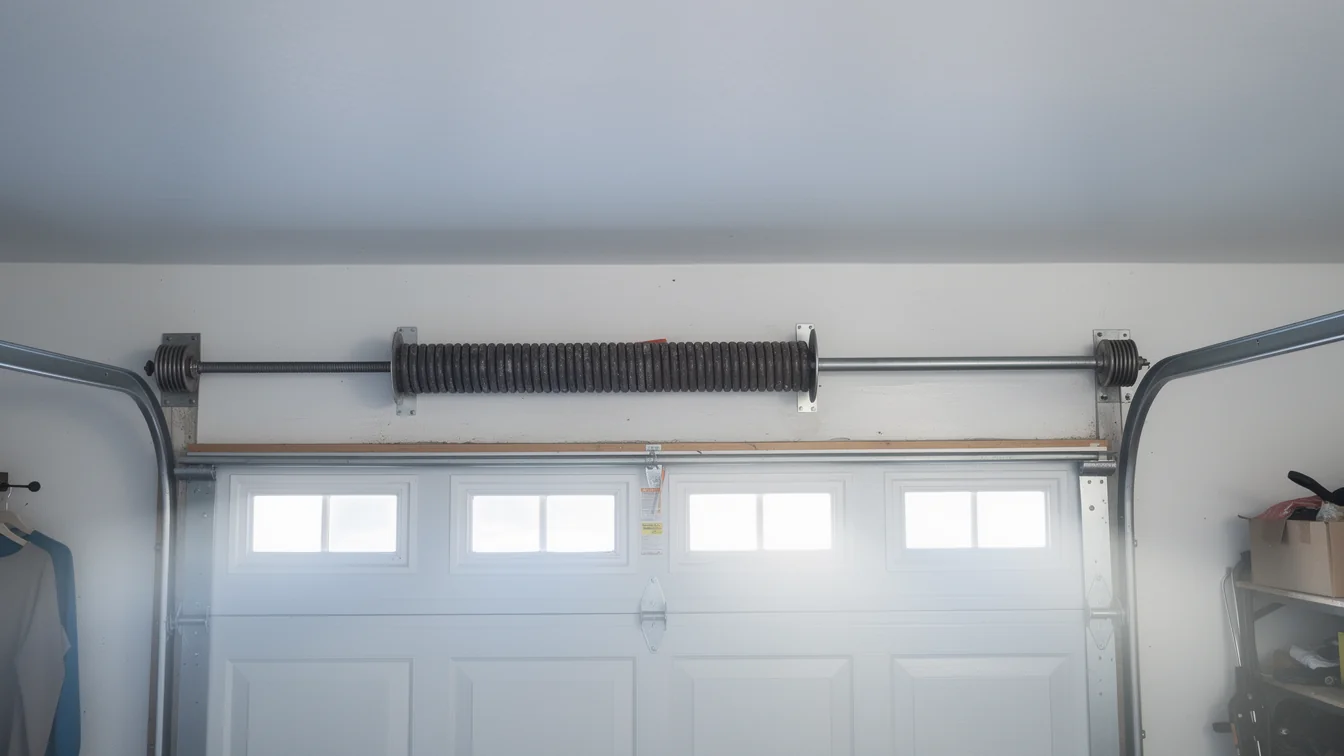
Before a cold snap, look at the spring itself - the coiled bar above the door, not the cables on the sides. A gap in the coils, a spring that looks stretched compared to its mate, or visible rust pitting are all signs it's close to the end. Listen for the door, too. A torsion spring under strain often makes a grinding or creaking sound on the way up that it didn't make a few months ago. If your door is noticeably heavier to lift by hand than it used to be, the spring is already doing less of the work it's rated for. None of this requires tools, just five minutes with the door open and the light on. One honest limitation here: we can't tell you a spring's exact remaining life from a visual check alone, and if it's original to a house built in the 1960s or 70s, the safest assumption is that it's past due regardless of how it looks.
Season by Season
Fall is when it pays to look, before the first hard freeze puts load on a spring that's already tired. Winter is when the failures actually happen - the bang in the middle of the night, the door stuck halfway, usually after a sharp overnight drop. Spring brings a different problem: condensation and temperature swings can loosen hardware that held fine all winter, so a rattle that started in January can turn into a dropped bracket by April. Summer is the quiet season for springs specifically, though it's when openers tend to act up instead, as heat affects the electronics more than the steel. If you're on a 1950s-1994 vintage house anywhere from Avondale Estates to North Druid Hills, the spring is the part worth watching hardest once temperatures start swinging, because that's the component with the most decades of fatigue already built in.
Frequently asked questions
Why does my garage door spring break specifically in cold weather?
Steel contracts as it cools, and a spring that's already fatigued from years of cycling has less flexibility to absorb that contraction. In a cold-moderate climate like Decatur's, the swing between a cold night and a warmer afternoon adds extra stress on top of the cold itself, which is often what pushes an old spring past its limit.
How old are most garage door springs in Decatur?
It depends on the house, but with median construction around 1972 across this service area, a lot of original or early-replacement springs are well past their rated cycle count. A spring that's thirty or more years old, even if it looks intact, is a reasonable candidate for failure during a hard freeze.
Can I tell if my spring is about to go before it breaks?
Sometimes. Look for a visible gap opening up in the coils, rust pitting, or a door that feels heavier to lift by hand than it used to. A grinding sound on the way up is also a warning sign. That said, a visual check isn't a guarantee - we can't give you an exact remaining lifespan just by looking at it.
Is it worth replacing both springs if only one breaks?
On a double door with two torsion springs of the same age, if one has failed from age and cold, the other has gone through the identical number of cycles and is usually close behind. That's a judgment call based on the specific door, not a rule we'd apply to every house.
Related garage door services in Decatur
More garage door guides
Book garage door service in Decatur
Call now or request a quote - tell us what the door is doing and where you are.